Future Design Inquiries. March 2026
Hello from ENSO, a future design company. We’re sharing the things that make us think, bring us joy or shift our perspective.
What we’re reflecting on
Yes, we will unf*ck the planet
Every year, I get to slip in the backdoor of the investor-focused Upfront Summit. Given the tech industry’s loss of idealism, I was expecting this year to be less inspiring; I was wrong. The shift to hard tech has coincided with a shift from fuzzy missions to hard, mission-driven innovation. So much progress on energy: Zanskar, using AI, has found more geothermal sites in 3 years than the entire industry has in over 30 years. Exowatt is building modular solar; Radiant Nuclear building microreactors; Panthalassa harnessing wave energy; Overview Energy beaming solar down from space. And in science, I was awed by LILA’s AI platform that’s already solving the hardest healthcare challenges in a fraction of the time and money it takes traditional pharmaceuticals. Perhaps the best advocate for this shift is Lowercarbon Capital’s Chris Sacca, who proudly says he’s ‘not a climate person’, but a capitalist who sees the cost curves mean customers can buy products ‘out of sheer greed, out of sheer self interest’ — no subsidies or moral persuasion required (*or actions of unstable dictators). “It’s so f*cking self defeating to deny the energy that’s coming from the sun.” The tech industry’s ‘idealism recession’ may be a clearing, and what’s left are those for whom mission and margin were never in conflict. (SB)
The patina of productivity
Once upon a time, ENSO had more than a dozen SaaS platforms — for tracking time, travel, feedback, contacts, payroll, etc. Just thinking about the collective time we spent stumbling to login to those things makes me wince. They certainly made us busier, but I’m just as certain they made us less productive in the real value we’re here to create. There’s an emerging concern that the same is happening with AI; George Sivulka makes a compelling case that individual productivity does not create firm productivity. Electrifying textile mills in the 1890s did not increase company productivity; only when mills were redesigned in the 1920s did productivity increase. Similarly, individual AI risks creating more noise and chaos (think, thousands of agents working independent of each other) unless companies redesign at the institutional level. Sivulka contends that productivity will only be unlocked when AI is designed at an institutional level to prioritize coordination, finding signal in the noise, and focusing on the upside of new revenue, rather than just the efficiency of cost saving. Referring back to the textile mills, he says, ‘We have our electricity. It’s time to redesign our factories.’ A factory redesigned around efficiency alone is just a faster treadmill. The first question isn’t how to coordinate AI, but what we’re coordinating for. Without clarity of mission, the seduction of ‘busyness’ is hard to resist, whatever tools we use. (SB)
United in fear
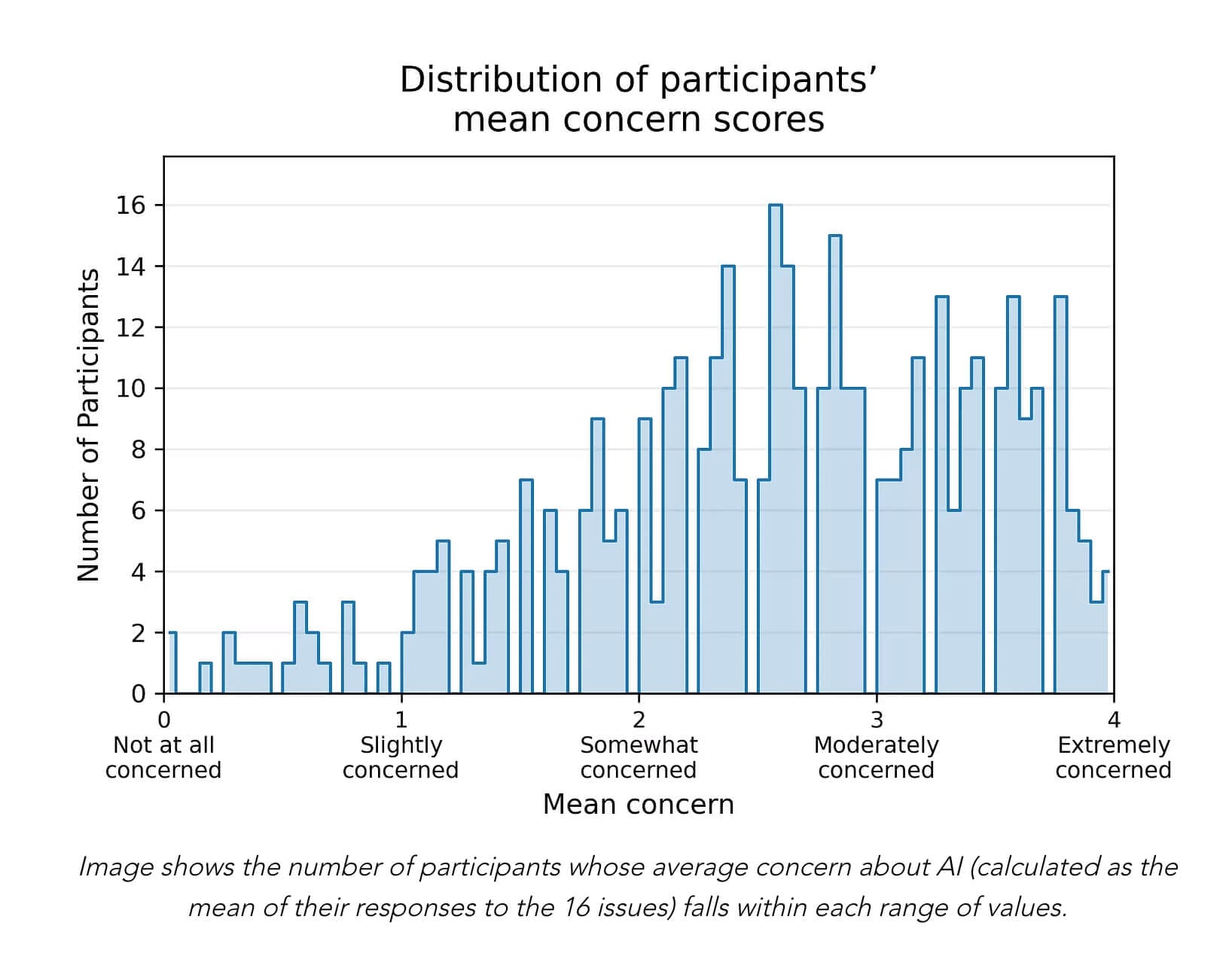
Speaking of AI, there is a new study showing that we are very, very concerned about it. Which matches a bunch of older studies, like this one showing that only 10% of Americans are more excited than concerned about AI. This fear is completely bipartisan – a rare find these days – and it makes me think about how united we are in our fear, and divided in our optimism. Which means that it’s much easier for fear-based narratives to change our collective behavior. Just a few weeks ago, a piece of speculative fiction erased $300B in market value. It outlined an apocalyptic scenario thanks to AI in barely two years. And despite no evidence so far to show that we’re on that track, the market panicked and by “the market” I mean us. But would the same speculative fiction through a positive lens (i.e. an outline of a world that is dramatically better in 2 years because of AI), have pushed the market equally in the other direction? My guess is no, because it’s gotten harder for us to collectively imagine a better future – and easier to imagine a worse one. We like to think that reality dictates our beliefs. But often it’s the other way around. So it’s worth thinking about broad-based, positive futures we can believe in – and saying them out loud. (HS)
Pushing past short-termism in business (?)
This week, news broke that the SEC is proposing to cut the quarterly earnings requirement for companies in favor of a biannual results sharing rule. Which opens up an opportunity for public companies, who have often felt forced against adopting a long-term view because the earnings pressure is so intense and so frequent. Imagine if companies could innovate to solve problems without the worry of showing revenue gains every three months. Yet there would need to be a cultural shift too – when the UK repealed its quarterly requirement rule in 2014, less than 10% of firms switched their practice within the first year because investors demanded quarterly reports stay. Still, we’re in a moment of societal transformation that arguably requires investment and long-term thinking in a way we’ve never had to do before. Biannual earnings reports seems like a good step in that direction. (HS)
These nuggets are curated by ENSO partners Hanna Siegel (HS) and Sebastian Buck (SB).
6 things that made us think, gasp, share and laugh:
- Someone asked Derek Thompson to explain what parenthood is like and, lucky for all of us, he wrote an essay about it.
- Galileo’s handwritten notes were found in an ancient astronomy text

- The Social Nature of Agency
- The Doorman Fallacy
- The case for being bad at your hobbies
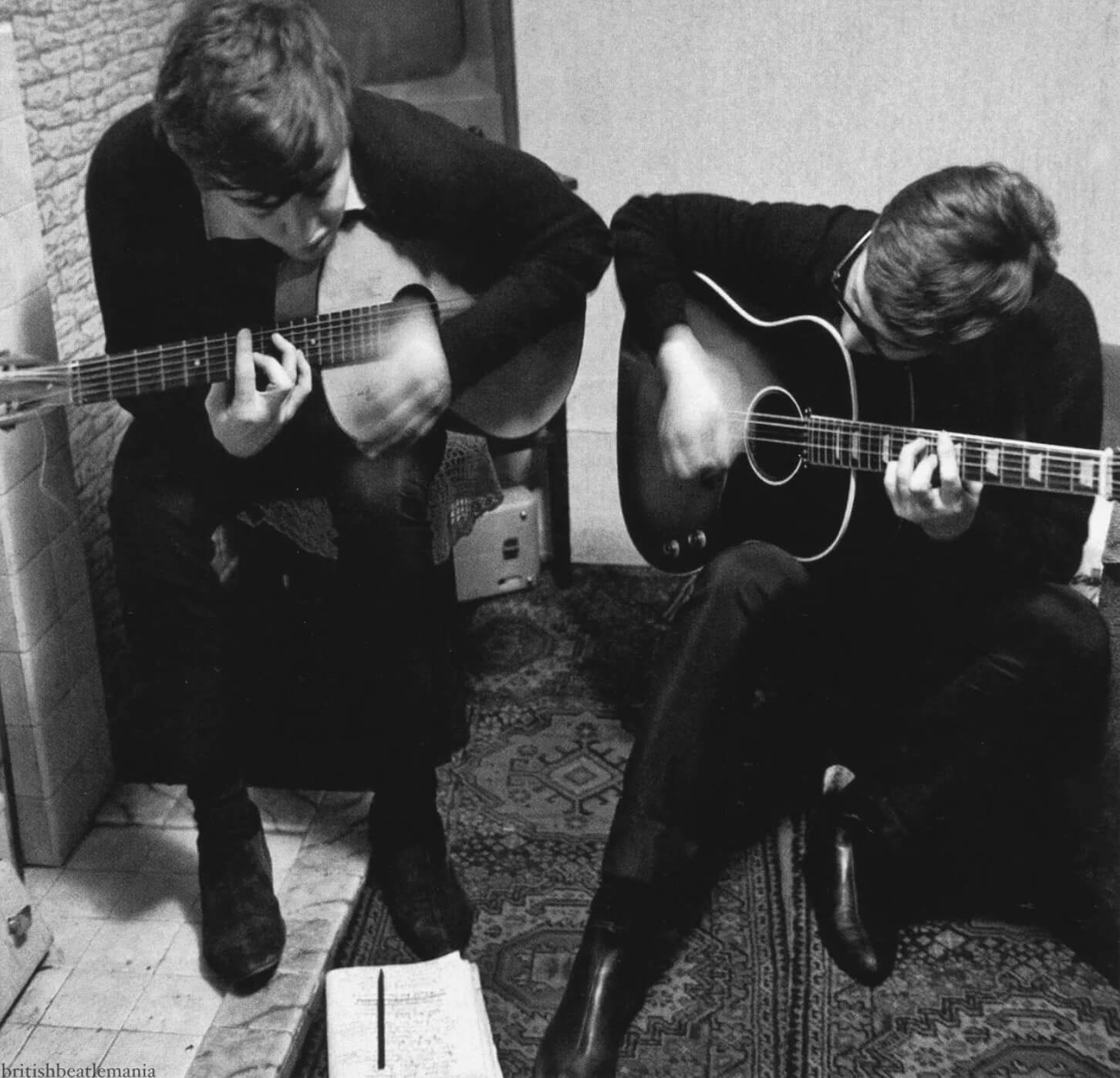
- Paul McCartney’s creativity, as written about by artist Austin Kleon
What we’re working on
ENSO is a small, senior team so that we can work on just a few initiatives at a time. This allows us to go deep on some of the biggest challenges/ opportunities. Recently, we’ve been working on a few main missions with our partners:
- Reimagining the future of the seas, and exploring what a new frontier in maritime might mean for the world
- Changing the world of work: the labor market is the engine of prosperity, but ~80% of people are not engaged or thriving. We’re working to change the system.
- Designing the largest day of service ever, with a coalition of 80 for-profit, non-profit and civic organizations
- Helping artists sustain an artistic life over the long term, and designing the space and tools to help artists everywhere thrive.
Thank you for being part of the network that fuels our optimism and expands what’s possible. We’re grateful for you, and we’re committed to creating positive futures together.
Want regular inquiries? Subscribe here to get our thoughts in your inbox every so often.
Reach us at news@enso.co
See you next time.
ENSO • 115 W California Blvd #9101 Pasadena, CA 91105