Future Design Inquiries. September 2026
Hello from ENSO, a future design company. We’re sharing the things that make us think, bring us joy or shift our perspective.
What we’re reflecting on
The missing ingredient
If I were to distill my operating agenda in life over the past few years, I could state it as: the pursuit of awe. The dislocation of covid times and the holy-shit reckoning of my cancer rodeo combined into a fierce pull towards the visceral wonder of this place. So I was happy to see Ian Bogost’s article in The Atlantic arguing that wonder, awe’s close cousin, is the missing ingredient of modern life. After a few generations of optimizing (profit, time, productivity, etc.) and this generation’s maxxing (looks, sleep, protein, etc.), he suggests we may be “maxxing our way out of the experiences and perspectives that give us maximum meaning. I’ve come to believe that wonder, the most immense of our sensations, is the antidote.” Two things I love about this prescription: First, it’s available if we want it: no special trip required, just a willingness to accept what the universe is already offering. Second, it changes almost everything. Back in 2018, Wharton professor Patti Williams told me about her work studying awe, and how it makes people more creative, more generous, more collaborative, and more likely to choose mission-driven brands. So there are personal, societal and business opportunities in awe. In a world that’s optimized for clicks and efficiency, some brands aim for ‘surprise and delight’; perhaps the braver design brief is: create awe. (SB)
Dopamine sites
There’s a new trend that’s arguably moving in the opposite direction of what Sebastian is talking about, and that’s digital spaces where you can order food that never gets delivered or new clothes that never come. Called dopamine sites, they simulate the act of consumption without actually consuming and the pitch is that you get the ‘hit’ of the ordering without the actual product that comes afterwards. Some say it’s a way to break your shopping habit, others say it’s a comment on excessive consumption, but its popularity suggests that sometimes the technology dopamine addiction is disconnected from the products themselves. One student in Seoul who founded the fake delivery service Food Never Arrives did it because she realized that she enjoyed ordering food more than she enjoyed eating it. But I find it interesting that her response to that is more technology. The yen among everyone, especially post-COVID, especially now, continues to be for more joy, higher wellbeing, greater happiness. Yet apparently millions of people, upon realizing that technology is failing to deliver, are trying to meet that gap with…more technology. Perhaps, to Sebastian’s point, instead of engineering a tech-enabled dopamine hit in a new way, we should pay more attention to what we know works: more wonder, more awe, greater (IRL) human connection. (HS)
The illusion of self-reliance
The final book I read last year was also one of my favorites: Nick Thompson’s The Running Ground. Thompson is CEO of The Atlantic, and a record-holding distance runner, but the book is really about his navigation of life. A particular turning point for him was surviving cancer: the brush with mortality brought a level of clarity and conviction on how he wanted to live. I experienced the same in my own cancer rodeo (but I didn’t get the world records). What scientists call post-traumatic growth can be a powerful thing, but it’s not automatic, it only emerges when we have the right social support and when we actively construct meaning from adversity. It’s what we do with the struggle, and who helps us through it, that determines whether we break or break through. Which brings me to Frank Capra, the godfather of holiday season movies like It’s a Wonderful Life and Mr. Smith Goes to Washington. Capra grew up through the Great Depression and World War II. His ‘fantasies of goodwill’ weren’t naive or sentimental, they were deliberate acts of collective meaning-making, processing generational trauma into stories that said: we can still choose kindness, community, and to believe in each other even when things feel dark. Living through another concatenation of crises, the question is whether we’ll create the conditions for post-traumatic growth at a collective level. Can we make meaning together that moves us forward? (SB)
What is progress now?
For centuries, our society has oriented towards the next technology. Progress, which means “movement toward an improved or developed state,” has been largely viewed through a steady drumbeat of innovations, from the wheel to the telephone, the vaccine to the internet. But now, you could argue that for the first time progress is being defined in the reverse. The challenge in front of us isn’t to extend our technological capabilities in the face of human constraint, but rather our human capabilities in the face of technological expansion. At ENSO, we have always talked about the future of business. But for most businesses today, the future is already taking shape — and that future is AI. Their problem is no longer technological innovation, because anyone can execute anything. The valuable and differentiating qualities are the intangibles: meaning, trust, personality and mission. These are the same things that have always been valuable, but now they have to exist alongside — and ultimately be enhanced by — AI. So the question is: what does progress look like now? (HS)
These nuggets are curated by ENSO partners Hanna Siegel (HS) and Sebastian Buck (SB).
6 things that made us think, gasp, share and laugh:
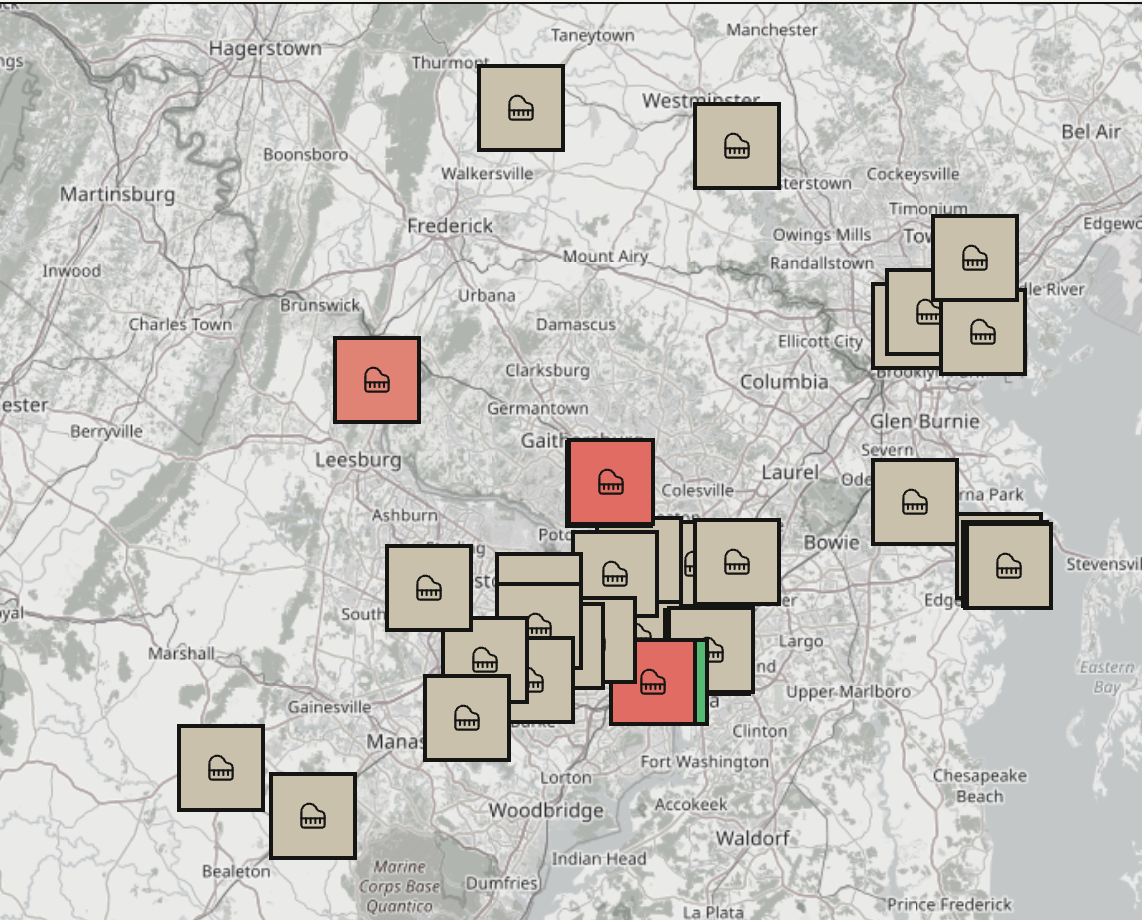
- Someone created a map of public pianos all over the world (!) – type in your address and find the nearest place to play, or hear
- This short, awesome and undeniably human (the typos!) essay, How to play Guitar, by the co-founder of the band Half Japanese David Fair
- Want to expand beyond white noise? The Guild of Ambient Sound (such a good name) produces original music and soundscapes of everything from “Haunted Crypt Sounds” to “Seaside Market Ambience” to “Medieval Tavern-Inn Ambience.”
- The world is better now there’s a 3 pound leopard
- Demis Hassabis talks at the Royal Society of Arts
- “WEBSITES WEBSITES WEBSITES! (WWW!) celebrates the website as an artistic medium, bringing together twenty artists for…an exhibition explores thirty years of our changing relationship with the internet through browser experiences that invite experimentation, intimacy and critique.” Basically, it’s a fun browse.
What we’re working on
ENSO is a small, senior team so that we can work on just a few initiatives at a time. This allows us to go deep on some of the biggest challenges/ opportunities. Recently, we’ve been working on a few main missions with our partners:
- Reimagining the future of the seas, and exploring what a new frontier in maritime might mean for the world
- Building awareness and new behaviors for childhood safety, when there's already too much to do.
- Helping artists sustain an artistic life over the long term, and designing the space and tools to help artists everywhere thrive.
- Changing the world of work: the labor market is the engine of prosperity, but ~80% of people are not engaged or thriving. We’re working to change the system.
Thank you for being part of the network that fuels our optimism and expands what’s possible. We’re grateful for you, and we’re committed to creating positive futures together.
Want regular inquiries? Subscribe here to get our thoughts in your inbox every so often.
Reach us at news@enso.co
See you next time.